
Garden Mother
Spending my spring with Martha Stewart’s gardening books

I may only have 100 square feet to work with, but it’s all happening in my balcony container garden right now. The only thing I’ve wanted this spring is to cover my space in flowers. It’s only natural given the darkness we are being forced to live in. I’ve spent the past two months obsessing over my perfect summer garden and now it’s go time in zone 10b.
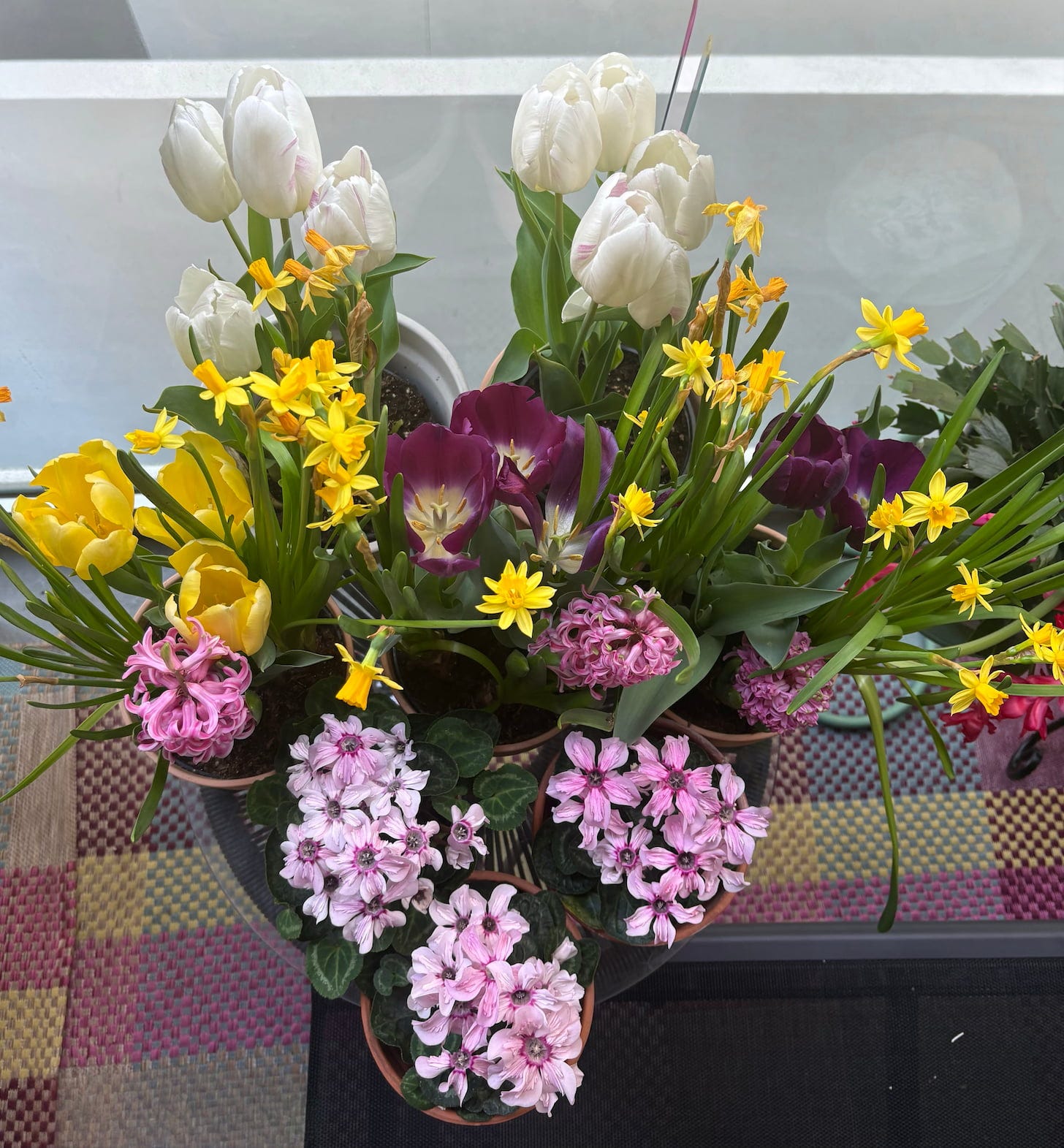
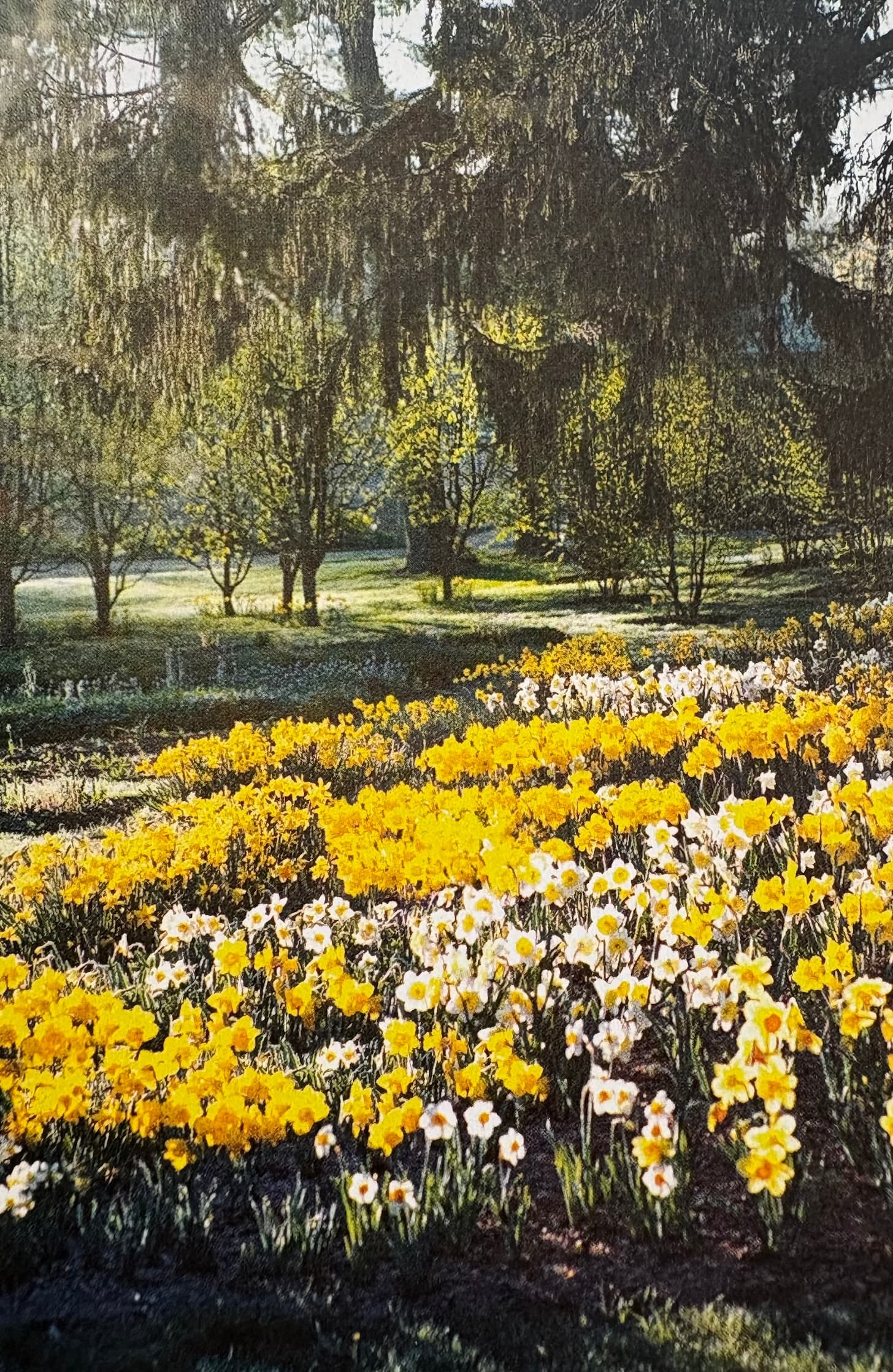
I started the outdoor season with an overflowing bulb display at the end of February: sunny yellow daffodils, white and purple tulips, showy pink hyacinths and pale pink cyclamen. And when the 90-degree heat wave (in March!) killed them all, I didn’t wait a day before going to the garden center to start sourcing their late spring replacements.
My entire kitchen, office and living room overlook my balcony, and while my pothos, monsteras, ficuses and ferns add a lovely array of greens to the space, these days I only have eyes for flowers.
Of course I had to research all of my spring and summer flower options within an inch of their life, and while you can absolutely get all the gardening information you need from the internet, I wanted my spring gardening to be guided by the Garden Mother herself, Martha Stewart. I had idealistic visions of a Julie-and-Julia moment— Martha as teacher, container garden as classroom. But it turns out that a zone 10b gardener cannot garden hand in hand with a zone 6 gardener because basically everything is completely different. So I did what any self-respecting Martha devotee would do. I picked up her first gardening book and her latest, read them side by side, took what I could apply to my garden, and wrote a substack about the rest.
Martha wrote her first gardening book, Martha Stewart’s Gardening Month by Month, in 1991— nine years after the famed Entertaining— from her six-acre Turkey Hill property, a scale I deeply relate to with my “urban jungle.” I mean, she had a rose border around her cut flower garden beds and I have a pretty big window box.
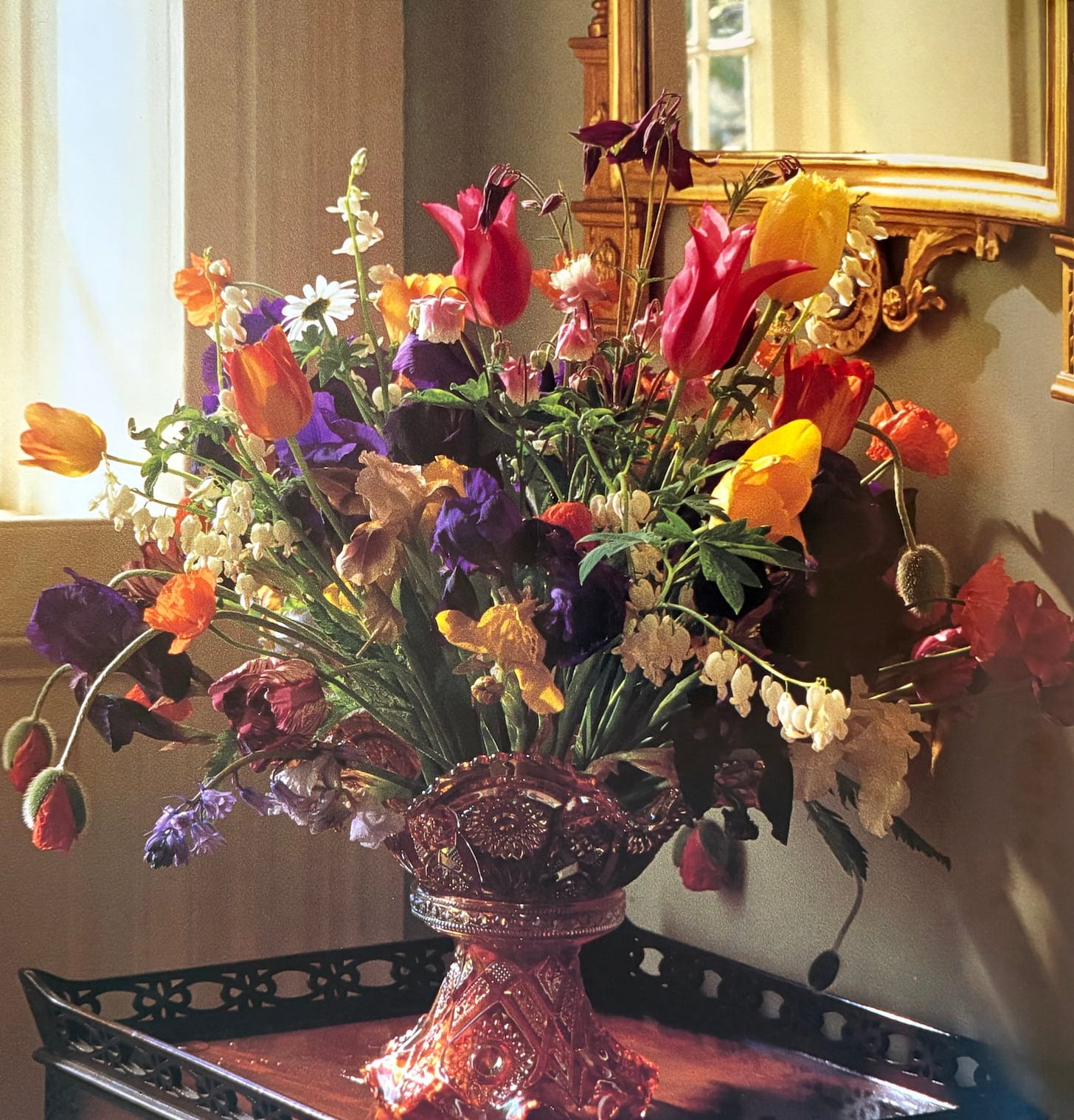
But scale be damned, because upon opening the book for the first time, I quickly realized I was there for the vibes. This book has Gael Towey’s influence all over it. The Creative Director of the Martha Stewart Living empire, and one of my personal special interests, has a signature warm, romantic style that is thankfully displayed generously throughout the book.
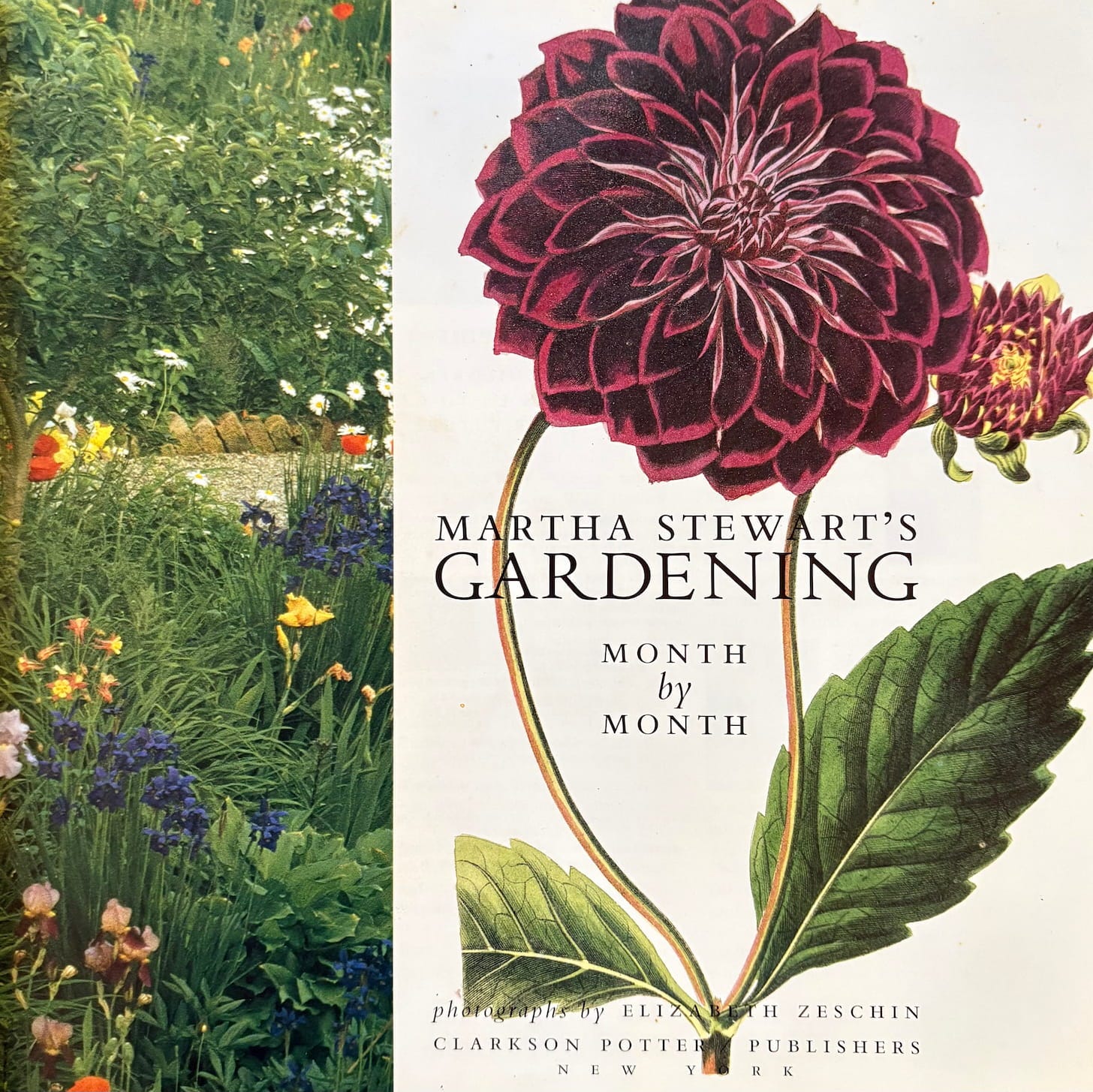
Martha spent four years creating this book. From the 19th-century-style sketch of Turkey Hill farm gracing the inside cover, complete with tiny accurate labels in perfect script, to the extensive bibliography on thick, creamy cardstock — the entire thing is beautiful. French botanical prints introduce every section, there are hundreds of stunning photos of her iconic gardens, and the introduction is truly heartfelt (it made me tear up). You really feel welcomed into her world. Always the hostess.
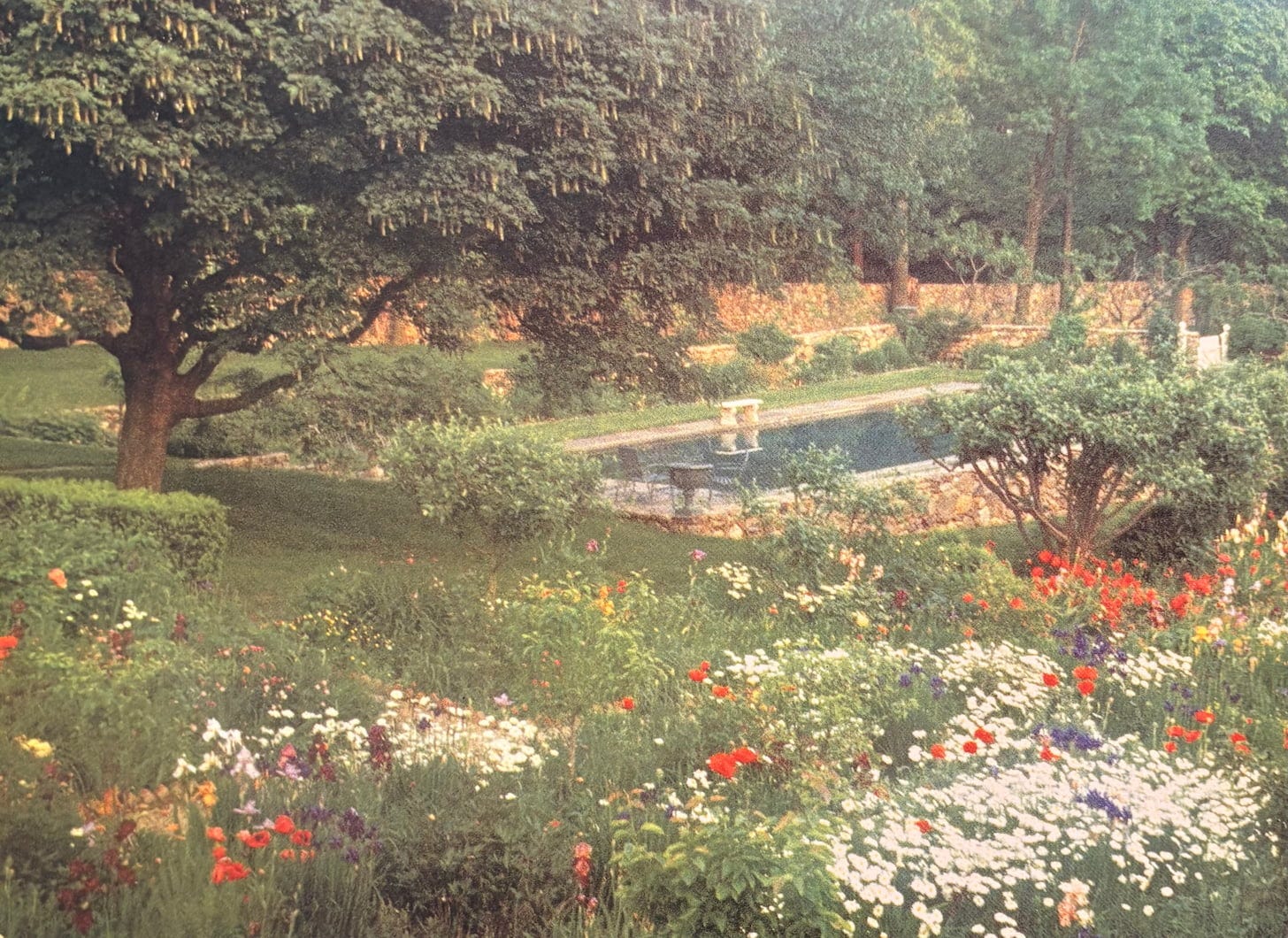
The book is organized in a straightforward way, January through December. January gets twelve pages and June gets eighty. Because that’s how gardening works and she wasn’t going to pretend otherwise.
Starting with the least photogenic month is something I don’t think you could get away with in 2026. But in 1991, Martha wasn’t trying to stop the scroll. She includes pictures of dead foliage and imperfect flowers when appropriate and it’s refreshing. Overall, she’s captured rather casually. She’s pruning, she’s raking, she’s kneeling in the dirt. Not polished, just gardening.
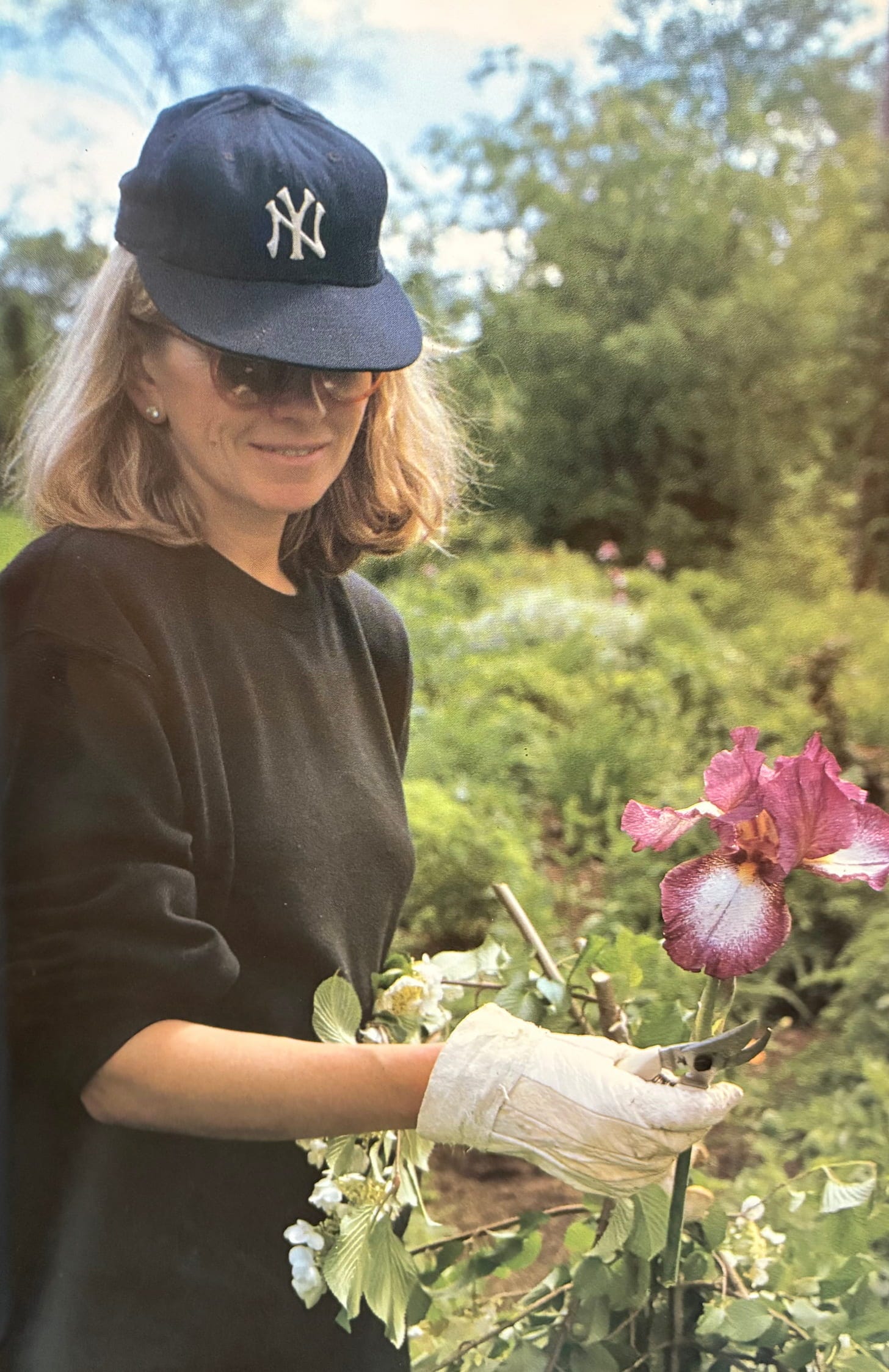
Of course Martha provides expert gardening information throughout the book, but it’s the imperfect and intimate nature of the writing that makes it so special. She notes her mistakes, like buckwheat hull mulch that didn’t work and sweet peas that got eaten by rabbits. She includes a small journal section in each chapter with seasonal to-dos and mini diary entries, noting that the garden is at its best in May so she must entertain every weekend, and her refusal to travel at all in June because the garden is in peak bloom.
She starts February by saying that meticulous seed planning is “still one of the most satisfying ways to spend one’s time,” and having just planned and planted my spring seeds, I’d have to agree.
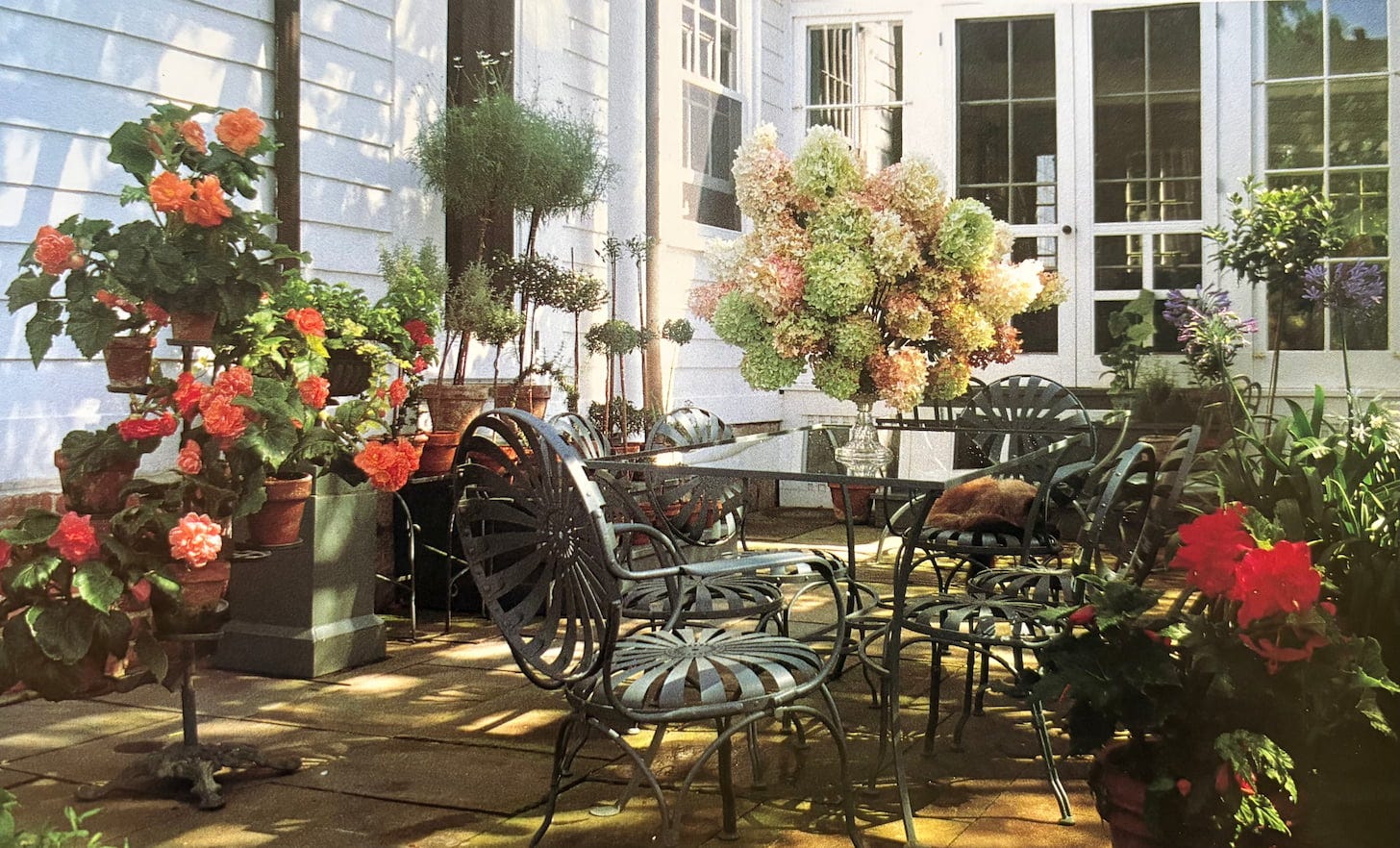
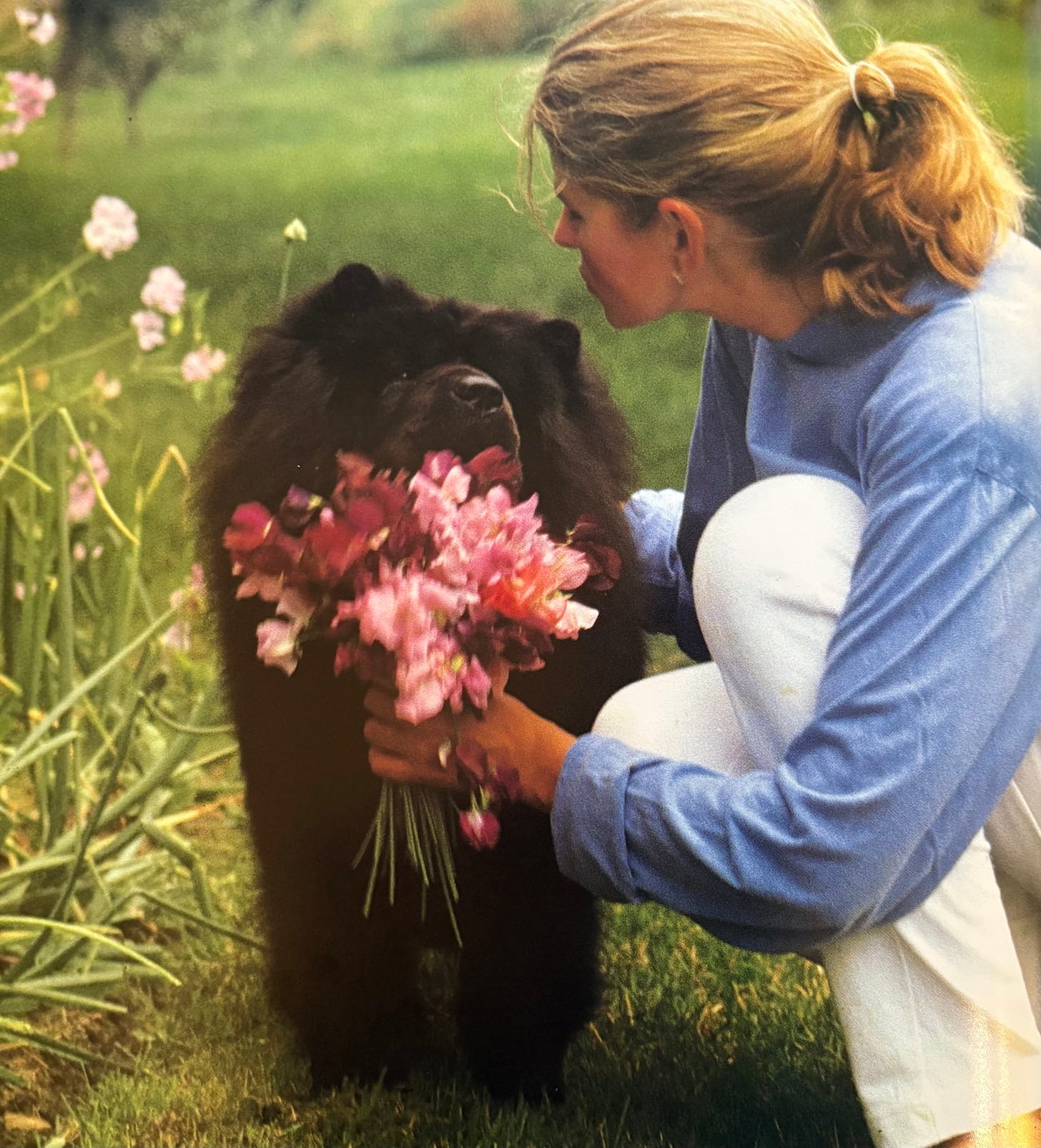
The real treasures are buried in the photo captions. Her favorite English gardens to visit near London (Hidcote, Upton House, Kew). Her favorite garden hoe (a heart hoe, naturally). The best example of this early peer-to-peer style is when she casually drops that Alexis, her daughter, is a vegetarian. To date, practically the most personal information we know about Alexis. Sips tea.
Thirty four years later, in March 2025, Martha published Martha Stewart’s Gardening Handbook. Her 101st book! I bought it the day it came out, obviously. Three hundred and sixty-eight pages of comprehensive, well-organized gardening instruction covering basically everything you could ever want to know. And next spring I’ll absolutely be creating the exact bulb lasagne technique that I learned in the container gardening section.
It’s also a completely different Martha.
Ever the serious teacher, she spends the whole first section of the book discussing native plants and their importance. You know, little things like removing carbon from the air, providing shelter and food for wildlife, and promoting biodiversity. And given the climate crisis we are in, I found that unsurprisingly responsible. She also taught me the word deciduous, which I will now be using at any opportunity.
The charm from Gardening Month by Month does surface occasionally in her niche advice, like a tip to always store garden tools in buckets of oiled sand or “play.” And the original Gael Towey aesthetic is referenced in her flatlays and styled floral photography.
But this is clearly a book written by Martha-as-brand, and (to my horror) the garden photos come from gardens all over the country with only a few from her Bedford farm sprinkled in. After over a hundred books, I don’t blame the queen for having a different tone. I guess I’ll just have to wait for her autobiography (which we know is currently in process) to get the personal angle I’m craving.
While Month by Month got the full notes-with-a-fountain-pen-in-my-leather-Paper-Republic treatment, the Handbook got a respectful skim.
Armed with Martha’s knowledge and my own obsessive research, I’m now aiming to create a fully designed, courtyard-like space on my balcony. My view is a lovely white wall, so I literally have a blank slate to fill. My inspiration boards are full of hanging baskets spilling over with lush florals, massive ceramic urns brimming with thrillers, fillers and spillers, and trellises covered in weaving vines.
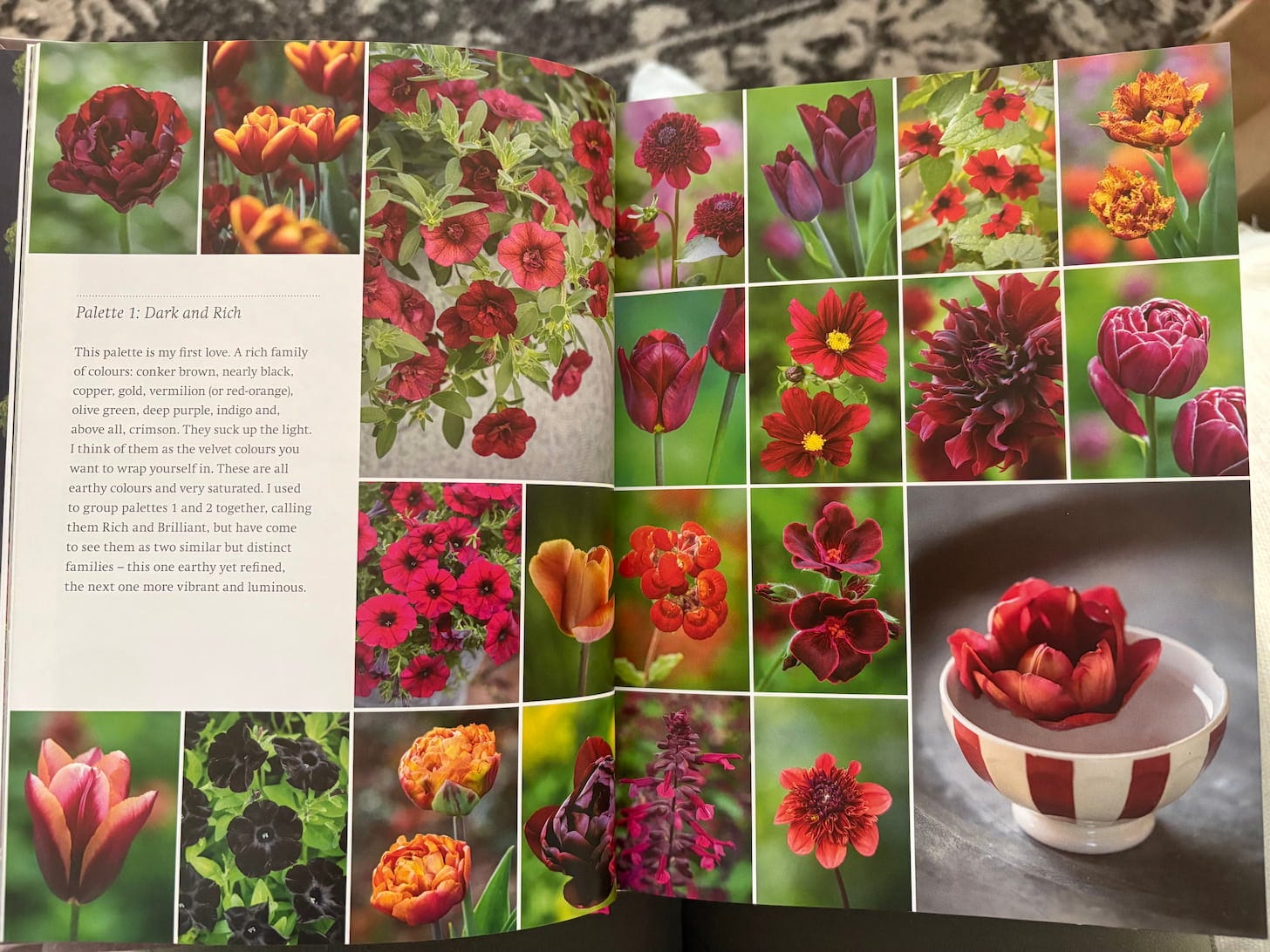
The color palette I chose (after weeks of deliberation) is inspired by the “Dark and Rich” palette from Sarah Raven’s A Year Full of Pots, my new container gardening bible. Raven describes this palette as “the velvet colors you want to wrap yourself in.”
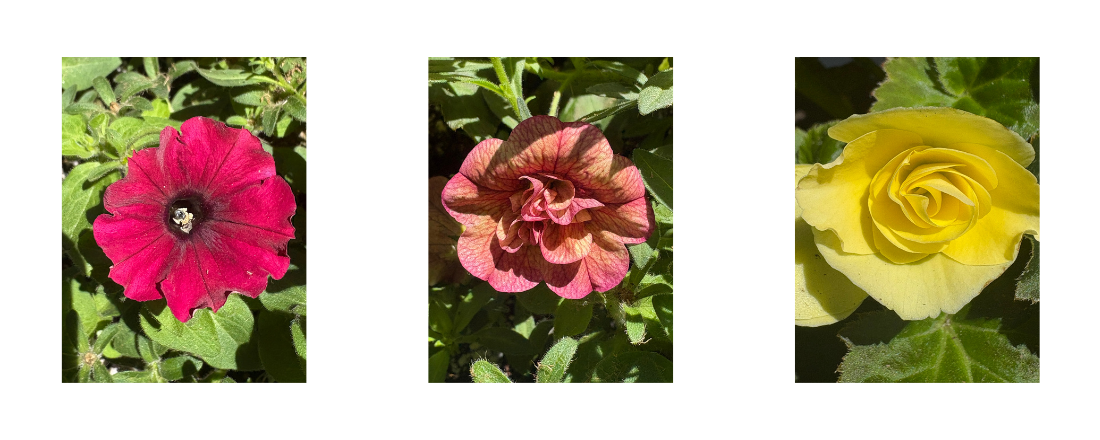
So far, I’ve planted an oversized antique style urn with golden rose begonias, blush calibrachoas, deep red petunias and silver dichondra trailing over the edge. The black window box with five scarlet African daisy plants lined up neatly in a row and a large vermillion abutilon (lantern plant). This week I picked up three fuchsia plug plants from Select Seeds' excellent selection of annuals that will soon have full, bell-shaped flowers. Of course, I need to acclimate the fuchsia to the balcony wind before potting them up in their black wire hanging basket. As you do. Finally, the most recent addition is four Rockapulco impatiens — a rosebush-looking shade plant, so that even my darkest corners can be full of blooms.
In everything I’ve learned thus far, I’ve used the “take what works and leave the rest” method to curate a gardening education from Martha, Sarah Raven, garden center plant tags, British strangers on Instagram, many panicked google searches, and my own trial and error.
If you need me from now until October I’ll be outside enjoying my 100 square feet for its own imperfect charm and potential for growth.